



Green Screen Studios
14th November 2022

Early special effects such as optical printing, double exposure and other matte techniques paved the way for Chromakey and compositing.
The first use of proper blue screen is credited to Larry Butler, for a scene in ‘The Thief of Bagdad’ (1940) where a genie escapes from a bottle. This when on to win the Academy Award for Best Special Effects that year.
Blue and green screens are used as they’re the furthest away from skin tones. Blue was originally the norm for television productions, however they moved away and into using green after practical considerations were taken into account such as the fact that television weather presenters tended to wear blue suits.
Check out all of our Green Screen studios here
Chromakey has continued to advance in leaps and bounds and advancement in technology and equipment has meant more depth and more possibilities for easier and quicker post production work.
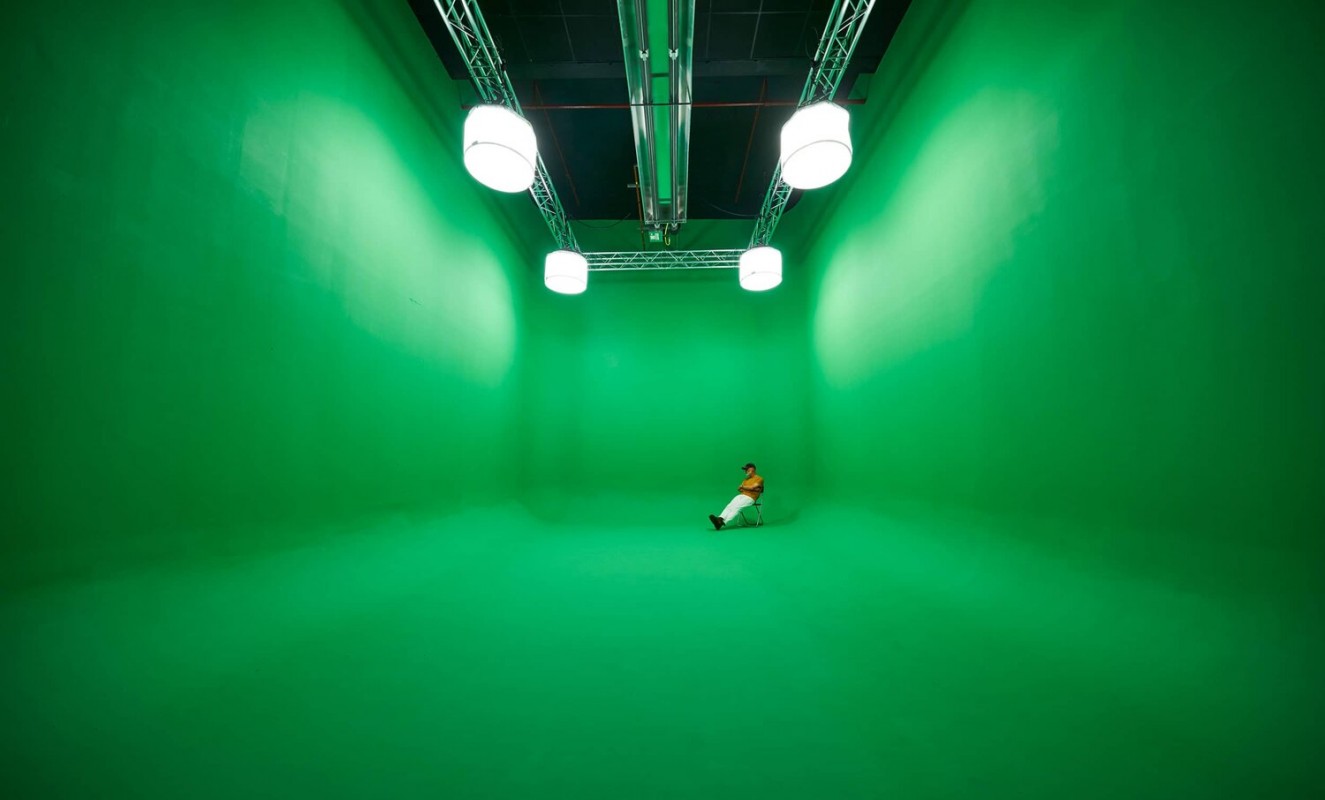
The major factor for effective green or blue screen is colour separation from the background (the screen) and the foreground (your subject). You want to light your screen and your subject separately and to light your screen as evenly as possible.
Keeping a good distance between your subject and the screen will also help you mimic the lighting in your new background and prevent any green tones bouncing onto your subject.
C R I X U S S T U D I O S - S T U D I O G R E E N

B R O A D L E Y S T U D I O

C A M B E R W E L L S T U D I O S

S U G A R S T U D I O S
C E N T R E S T A G E S T U D I O S

Interested in other similar studios?
You can search through our Shoot Studio directory here:
SEE ALL STUDIOS